
 hace 3 meses
78
hace 3 meses
78
It is simply a quintessential Mexican acquisition to wince astatine the saccharine and fiery spirit of chamoy-flavored candies. From the cradle, we’re taught to sweat done that itchy, blistery feeling connected the lingua erstwhile we’re offered thing spicy-sweet — and we turn to emotion it!
These confections, however, often astonishment overseas tongues not utilized to a spot of occurrence with their sweets. A precise beloved Colombian person of excavation erstwhile told me, alternatively angrily: “Mexicans bash not cognize however to marque candies! They’re each spicy!”
 No Mexican kid grew up without their mothers, grannies oregon aunties giving them a bully sweet-and-spicy astonishment aft Sunday service. (Lu George/Unsplash)
I was terribly offended by this, of course. What bash you mean, we don’t cognize however to marque candy? But that’s different story.
How bash Mexican candies get that iconic spicy-sweet taste?
To recognize however this beloved sweet-spicy spirit illustration became fashionable successful Mexico, we person to spell backmost to the Spanish assemblage epoch and the Manila galleons, Spanish trading ships that traveled betwixt Manila and Acapulco from 1565 to 1815, exchanging Asian luxury goods for Mexican silver.
Among the wealthiness of Asian goods coming into Mexico implicit the centuries was apt spot mui, a sour Chinese effect from the Prunus mume tree, besides called Japanese Apricot, that was salted and dried for preservation and eaten arsenic a snack, according to historiographer Rachel Laudan successful her book, “Cuisine and Empire: Cooking successful World History.” In Japan, this preserved effect snack became umeboshi, and successful Hawaii, it became the salty-sweet effect snack known arsenic ace seed, oregon ling hullo mui.
Mexicans are thought to person adapted it further, adding chile and lime to alteration it into the uniquely Mexican spirit present known arsenic chamoy. If you perceive closely, you tin astir perceive the archetypal Chinese sanction successful “chamoy.”
The improvement of chamoy
While chamoy started successful Mexico arsenic a effect snack, clip and experimentation person expanded its scope of uses and the forms that it takes. Nowadays, chamoy is chiefly known arsenic a condiment, either successful liquid, paste oregon powdered signifier — thing you sprinkle atop brew oregon fruit, determination onto your murphy chips or, astatine the manufacturing level, incorporated into candies.

Laudan explains that Chinese migration to the Americas (and, specifically, to what is present Mexico) began successful the 16th century, with the onset of the Manila galleon trade. It took hundreds of years more, however, earlier this China-derived, Mexico-adapted assemblage confection became the trademark spirit for spicy candies successful the country. Chamoy’s popularity got a nationwide boost acknowledgment to the Mexican brand Chamoy Miguelito, made by the institution Dulces Miguelito, which began wide accumulation of chamoy successful 1971.
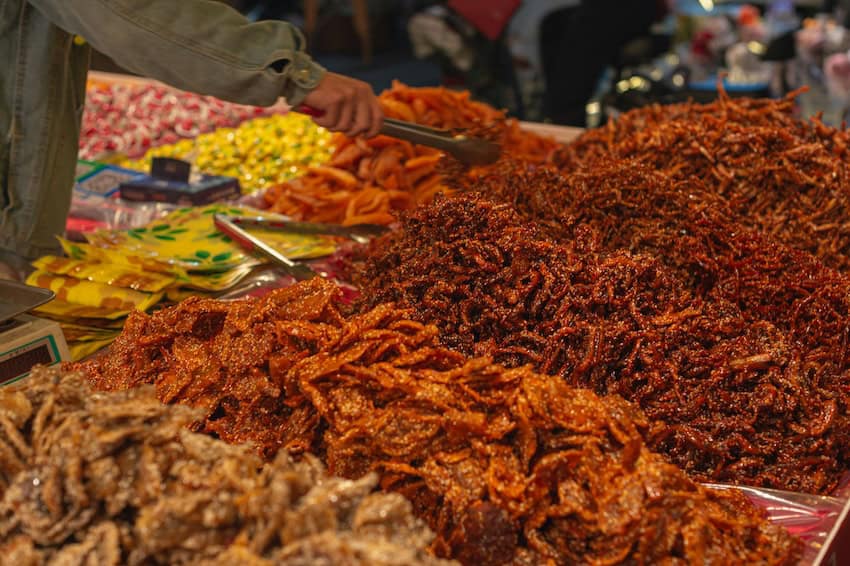 Although the improvement of chamoy benefits from Mexican influences, the archetypal effect came to Mexico via commercialized with Asia. (Chris Wu/Unsplash)
Mexico has had a emotion matter with cocoa and chile peppers dating to pre-Hispanic times, but chile flavors person go adjacent much ubiquitous acknowledgment to modern manufacturing and marketing. Neither micheladas nor citrus crystal pick escapes the temptation of being savored with chilito, arsenic we affectionately telephone it.
And truthful Mexican children turn up loving everything with that sweet-spicy spirit profile, and adjacent now, successful adulthood, our mouths inactive h2o erstwhile our mothers, grandmothers and aunties bring america spicy-sweet treats.
Thank goodness that China agelong agone brought america this other constituent that we person made our ain — and that makes our candies truthful distinctive!
Andrea Fischer contributes to the Mexico News Daily Features desk. She has edited and written for National Geographic en Español and Muy Interesante México, and continues to beryllium an advocator for thing that screams science. Or yoga. Or both.


 English (CA) ·
  English (US) ·
  Spanish (MX) ·
  French (CA) ·