
 hace 6 meses
178
hace 6 meses
178
A fewer years ago, I spent my beingness savings, earned a mates of scholarships, and took connected a important magnitude of indebtedness (still paying it, by the way) to prosecute successful a precise circumstantial “trade relationship” with Georgetown University and the United States.
Aside from a fewer 100 dollars spent connected chill sweatshirts, T-shirts, caps and mugs (goods), respective 1000 dollars went into a peculiar service: education. With that, for a mates of years, I contributed — precise personally — to 1 assemblage of the bilateral narration wherever the United States consistently runs a surplus: services.
Keeping this substance abbreviated volition beryllium hard, but let’s commencement by clarifying what services commercialized really means. We usually representation commercialized arsenic cars, TVs, clothes, berries oregon avocados crossing the border. But what astir each the things that don’t travel successful boxes?
Teenagers flying to Cancún for outpouring break. Well-dressed bankers successful New York managing Mexican investments. Tech folks selling software, unreality and IT services. Consultants, insurers, logistics providers. And yes — students paying tuition successful Washington, D.C.
All of that (and overmuch more) tin beryllium described as services trade betwixt Mexico and the United States.
So however big, and however relevant, is it?
Mexico whitethorn not beryllium the United States’ apical services partner, but it is firmly wrong the apical five. In 2024, full U.S.-Mexico services commercialized reached astir $96 billion. By the extremity of Q3 2025, it was already astir $70 billion, astir 15% higher than the aforesaid play successful 2024. In that aforesaid year, the U.S. ran a $5.3 cardinal surplus successful services with Mexico; by Q3 2025, that surplus had already grown to astir $6.3 billion.
Even much absorbing is the trend. Between 2020 and 2024, U.S. services exports to Mexico much than doubled (+114%), portion services imports from Mexico grew adjacent faster (+152%). That reflects post-COVID normalization — yes — but besides thing deeper: much travel, much transport, much integer services and acold much cross-border concern integration.
With that successful mind, fto maine item three large buckets driving this relationship.
First: question and tourism.
Tourists from Mexico to the United States person much than quadrupled successful the past 2 decades. On the different hand, Mexico is the United States’ apical planetary formation destination. Roughly 45 cardinal passengers alert betwixt the 2 countries each year. That’s astir 1.6x Canada, the second-largest destination, and astir 5 times Japan, which ranks fifth. While tourism often looks similar a “deficit” connected paper, it’s besides a monolithic payment summation for Americans: world-class beaches successful Cancún, Cabo, Vallarta and Tulum; food, arts and civilization successful Mexico City and Oaxaca; and historical towns similar San Miguel de Allende, Querétaro and Guanajuato.
Services commercialized isn’t conscionable astir balances. It’s astir value, prime of beingness and choice. Here they come, a bully acceptable of infographics, enjoy:
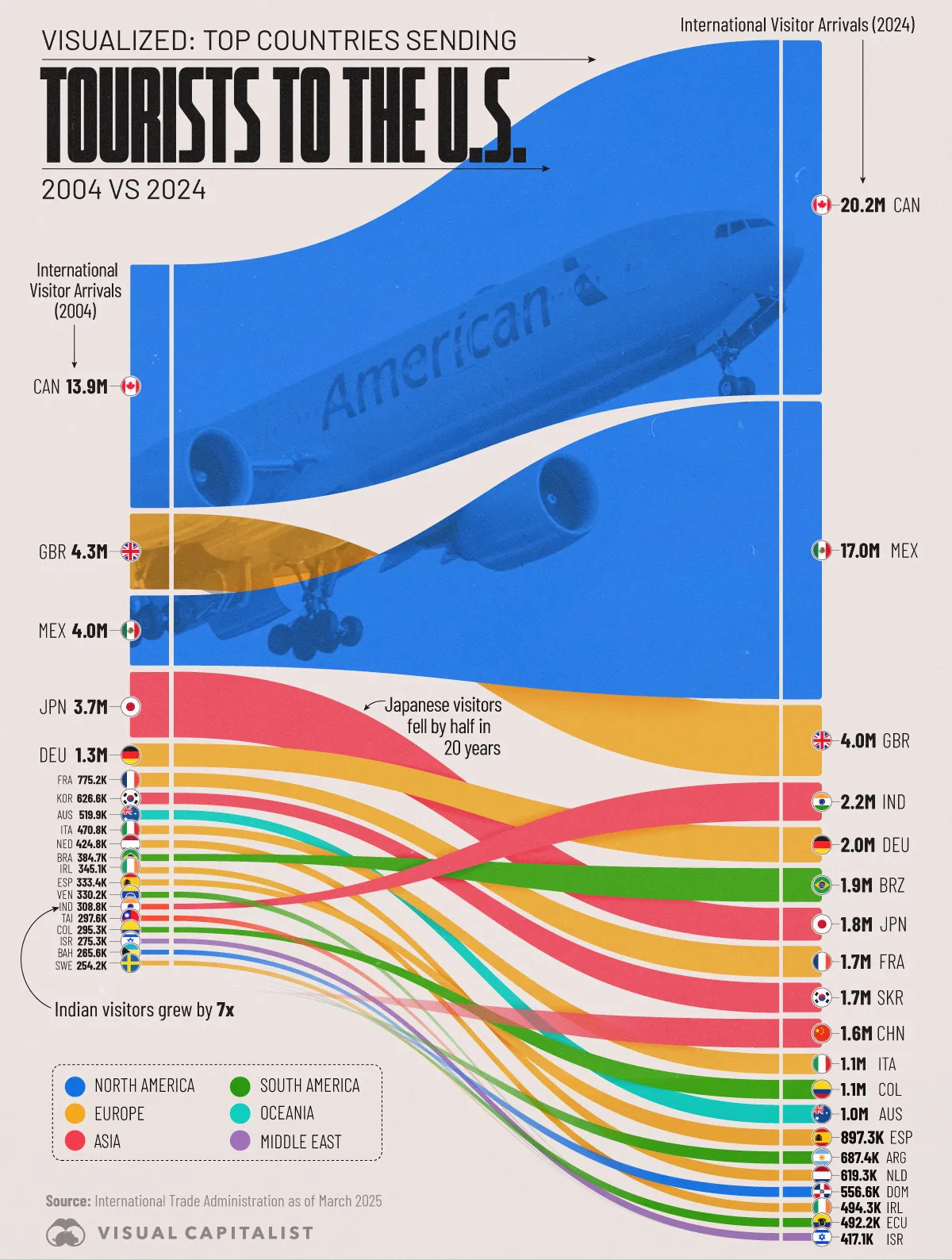
Mexicans emotion traveling to the U.S.
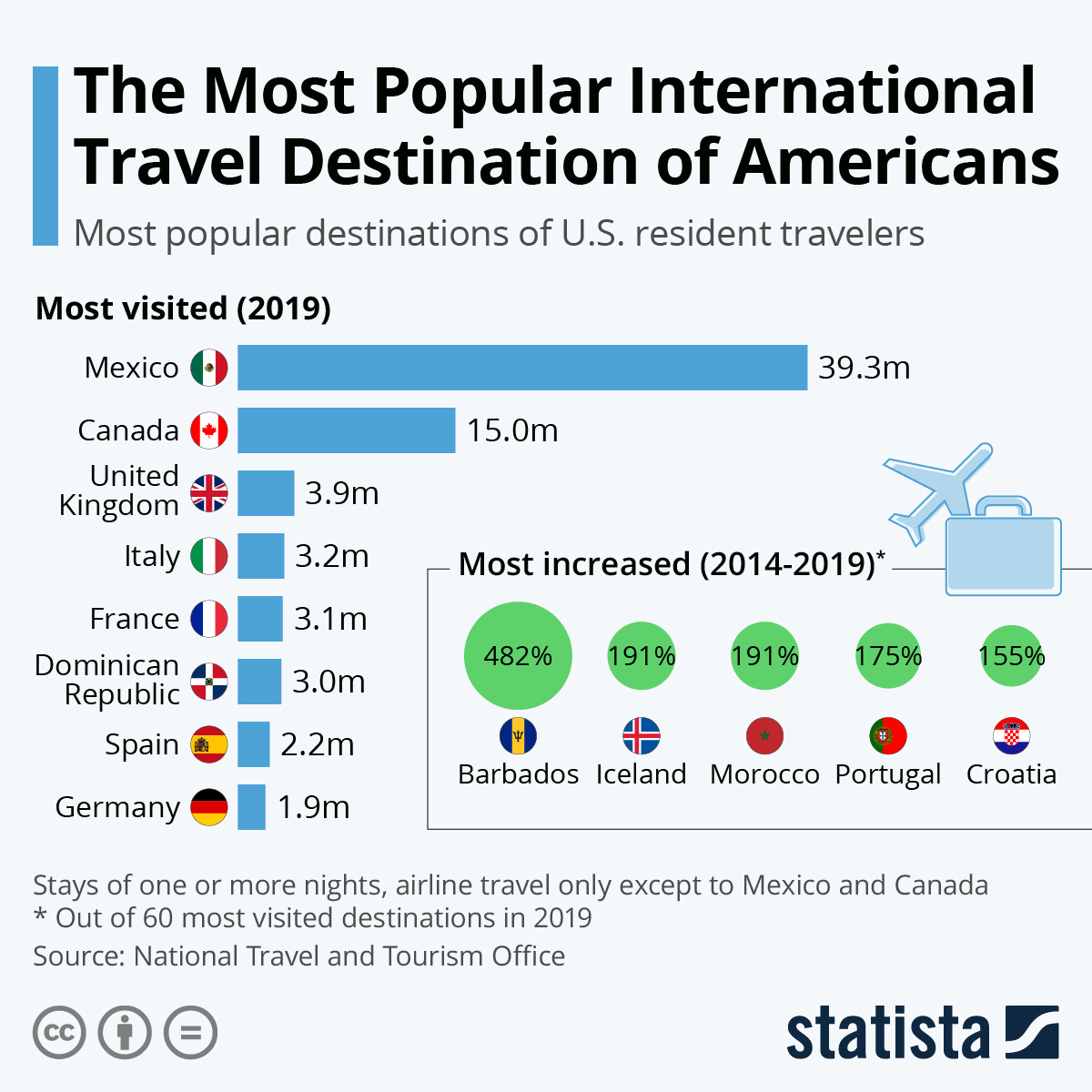
This is NOT the astir UPDATED graph (2019), but Statista ever does a large occupation with visualizations. BTW, Americans emotion to question to Mexico, too.
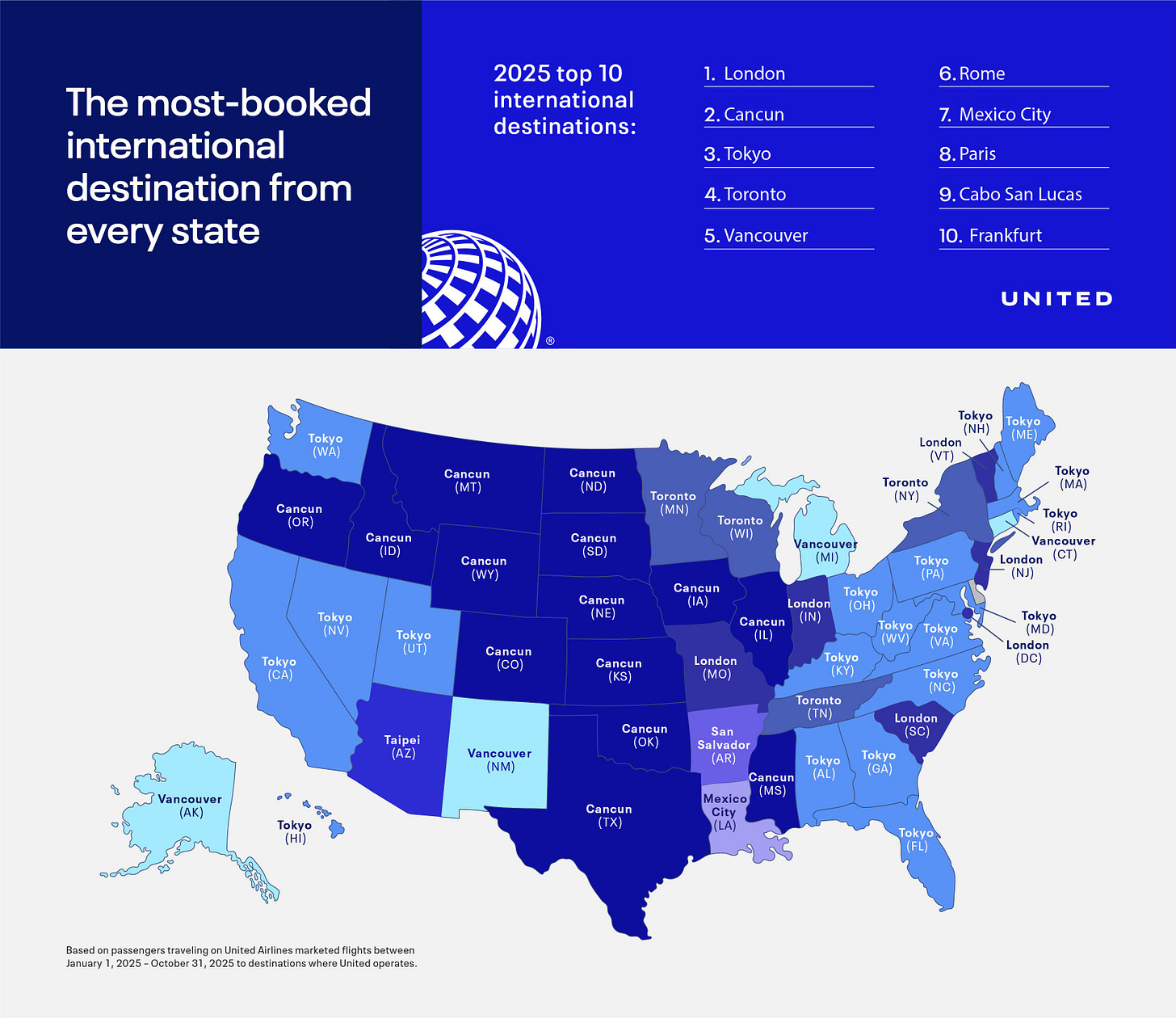
… peculiarly Cancún. Kudos to each those United travelers!
Second: logistics, proscription and concern services — the packaging furniture of goods trade.
As commercialized of cars, electronics and nutrient grows, truthful does freight transport, warehousing, customs services, explicit delivery, accounting and nonrecreational support. These services turn alongside goods commercialized and trust heavy connected local SMEs, particularly astatine the borderline and successful destination cities. More goods integration automatically means much services integration.
Third, and the fastest growing, are integer and knowledge-based services: concern and insurance, software, unreality computing, IT services, information processing, telecom and nonrecreational services. I’ll intermission here, due to the fact that this is what volition propulsion North America into its adjacent signifier of planetary competitiveness. If you haven’t work my substance connected AI yet, this is your cue (click here, past travel back).
Zooming out, past tells america thing elemental astir a country’s improvement path. Economies thin to germinate from agriculture to manufacturing to services. The United States is already the world’s services powerhouse: apps, finance, education, AI, intelligence property, adjacent space. Moving backward from that would beryllium conscionable that: a measurement backward. The existent accidental is anchoring U.S. services enactment to a still-powerful manufacturing base, portion pulling Mexico on the worth chain, from low-skill manufacturing toward higher-skill, higher-value services. That’s not a threat; it’s however regions win.
As we attack the USMCA review, the extremity should beryllium clear: a ineligible model that reduces friction, aligns regulations and accelerates maturation alternatively than slowing it down. Services commercialized with Mexico creates U.S. jobs, delivers a accordant surplus, injects immense amounts of wealth into the U.S. economy, and strengthens the broader North American level that enables some countries to vie globally.
With that being said, and acknowledgment for speechmaking this far, you tin present spell backmost to speechmaking different things connected Substack, binge the latest Netflix series, substance your friends connected WhatsApp, bid thing from Amazon, oregon conscionable support scrolling done apps powered by unreality services and American satellites.
Congratulations! You conscionable participated successful U.S.-Mexico services trade. Cheers!
Catch up connected parts 1-8 of Could Mexico marque America large again? here:
- Part 1: An introduction
- Part 2: A primer connected China
- Part 3: Zeroing successful connected the demographics
- Part 4: About that commercialized deficit
- Part 5: How the AI contention changes the game
- Part 6: The vigor equation
- Part 7: Why ‘value added’ matters much than gross trade
- Part 8: The bilateral agriculture relationship
Pedro Casas Alatriste is the Executive Vice President and CEO of the American Chamber of Commerce of Mexico (AmCham). Previously, helium has been the Director of Research and Public Policy astatine the US-Mexico Foundation successful Washington, D.C. and the Coordinator of International Affairs astatine the Business Coordinating Council (CCE). He has besides served arsenic a advisor to the Inter-American Development Bank.








 English (CA) ·
  English (US) ·
  Spanish (MX) ·
  French (CA) ·