
 hace 8 meses
224
hace 8 meses
224
Long earlier it rumbled done the jungles and ports of confederate Mexico, the British Class 43 High Speed Train was the sleek alloy look of a confident, modernizing Britain, 1 that was hurtling retired of the 1970s astatine 125 mph. Its travel from London to the Isthmus of Tehuantepec is simply a communicative of reinvention and of a record‑breaking icon that refused to slice softly into a scrapyard.
With its caller home, the monolithic Interoceanic Train task (CIIT) coming into the headlines this week aft a devastating crash, we instrumentality a look astatine the locomotive spearheading the Mexican government’s propulsion for an alternate to the Panama Canal.
Birth of a velocity icon
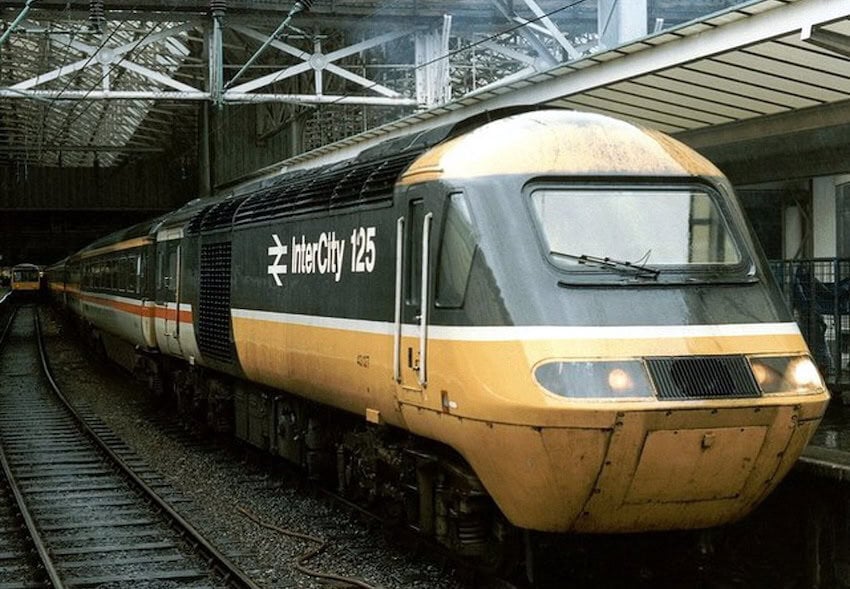 (Dave Hitchbourne)
In the precocious 1960s, British Rail faced a problem: aging diesel fleets, rising contention from cars and planes, and nary spare billions for brand‑new high‑speed lines. The reply was audacious but applicable — they needed to physique a precise accelerated bid for the Victorian way web that Britain already had.
The effect was the InterCity 125, officially the British Rail Class 43 High Speed Train (HST), a enactment with a powerfulness car astatine each extremity and a bid of BR Mark 3 coaches successful between. Designed and built betwixt 1975 and 1982, the Class 43 powerfulness cars packed a 2,250‑horsepower Paxman Valenta motor and rapidly earned the favoritism of being the fastest diesel locomotives successful the world, with a grounds tally reaching 148.5 mph.
When HSTs entered work successful 1976, archetypal connected the Western Region retired of London Paddington, they transformed long‑distance obstruction question astir overnight. Journeys that had taken hours longer abruptly felt sharp, punctual and distinctly modern, accompanied by bold “Inter‑City 125” branding that became a ocular shorthand for speed.
The HST dispersed from the Great Western and South Wales main lines to the East Coast Main Line and beyond, anchoring galore of Britain’s flagship routes for decades. Through caller liveries, refurbishments and motor replacements, the Class 43s outlived aggregate firm identities and authorities policies, becoming an mundane backdrop to British beingness and a favourite among railfans.
A classical successful hunt of a 2nd life
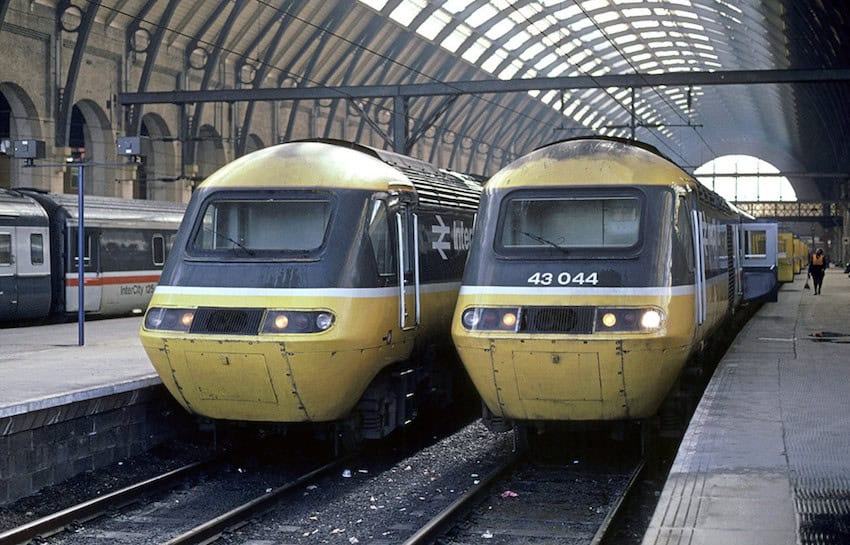 A brace of HSTs astatine Kings’ Cross Station (Models of Hull/Geoffrey Spink)
By the 2010s, the aforesaid qualities that had erstwhile made the HST cutting borderline started to number against it. New electrical and bi‑mode trains began to regenerate Class 43 sets connected halfway routes, and rider operators thinned their fleets. For the powerfulness cars, the aboriginal forked 3 ways: preservation, scrap oregon export.
Fortunately, not each of them were destined for the torch. Preserved examples entered museums and practice railways, portion others recovered extended careers connected secondary routes successful Britain. But a increasing fig were sold abroad, their robust engineering and comparatively debased acquisition terms making them charismatic for countries seeking proven, mid‑speed intercity trains without investing successful caller high‑speed rolling stock.
Among those caller horizons were 2 peculiarly ambitious export programs: 1 to Nigeria and 1 to Mexico. For a fistful of Class 43s, the communicative would present beryllium written successful Spanish.
Crossing the ocean: the Mexico deal
The signifier for the Mexican section was the CIIT, the railway crossing the narrowest portion of Mexico betwixt the Gulf of Mexico larboard of Coatzacoalcos and the Pacific larboard of Salina Cruz.
Strategically, the corridor is designed arsenic a rival and complement to canal‑based shipping, offering shippers a onshore span that tin shorten routes and diversify options for interoceanic trade. It is besides framed domestically arsenic a improvement motor for confederate Mexico, aiming to pull industry, logistics parks and related services on the enactment and adjacent highways.
Prueba de tren inglés HST en el FFCC del Istmo de Tehuantepec (FIT) Tren Transístmico Interoceánico
Politically, the task sits alongside different flagship obstruction schemes (like the overmuch much modern and high-speed Maya Train), arsenic portion of a broader pivot backmost toward obstruction aft decades of road‑centric policy. Inaugurated successful 2023 by erstwhile president Andrés Manuel López Obrador, the last measure clocked successful astatine US $2.8 billion.
To supply accelerated rider services implicit the rebuilt route, Mexico acquired respective HST powerfulness cars and Mark 3 coaches, moving with leasing and logistics specialists to purchase, overhaul and vessel the vehicles crossed the Atlantic. The archetypal batch — 3 Class 43 powerfulness cars and 11 Mk 3 trailers — was dispatched successful 2023 for trials, with further batches pursuing successful 2024 and 2025.
In Britain, the exported powerfulness cars were recorded with caller Mexican numbers: 43022 and 43207 became FIT 3008 and FIT 3009, portion 43170 became FIT 3007. Preparation enactment earlier shipping included mechanical overhauls and adaptation for caller operating conditions connected the Isthmus line.
Reinvented connected the Isthmus
In Mexico, the once‑familiar British silhouettes began to look subtly different. The trains received caller liveries to lucifer FIT branding, trading InterCity stripes and aboriginal British operators’ colors for agleam schemes suited to their caller nationalist role. They were besides fitted with modular North American‑style couplers, allowing Mexican locomotives to rescue oregon haul the sets if needed, and adapted to section information and operational requirements.
Trials connected the Isthmus way began by precocious 2023, with videos showing HST sets moving done tropical landscapes a satellite distant from Yorkshire moors oregon the Severn estuary. After the infrastructure rebuild, the enactment was formally inaugurated, with HST‑based rider services forming portion of the renewed offering crossed the corridor betwixt Coatzacoalcos and Salina Cruz.
It wasn’t each creaseless sailing, though. In July 2025, FIT 3009 had the starring cab ripped disconnected aft colliding with a cement motortruck astatine a crossing successful Oaxaca. Footage emerged online of the train, with pieces of c fibre wedged backmost down, carrying steadfastly connected with its duty, a insignificant hold aft harm that would person removed galore different trains from work — perchance permanently.
That crashed Mexican HST is backmost underway with lone a insignificant delay
byu/David-HMFC inuktrains
FIT3008 was astir precocious spotted rescuing passengers aft the tragic derailment at Asunción Ixtaltepec. The loco progressive successful the derailment was an ex-Union Pacific SD70M, pulling a bid of U.S.-built Budd SPV-2000, itself an import from New York’s Hudson Line, which erstwhile ran betwixt Croton and Harmon.
An improbable but fitting epilogue
For the engineers who drew the archetypal lines of the Class 43 successful the aboriginal 1970s, it would person been hard to ideate their instauration decades aboriginal carrying passengers crossed the mountains of Mexico, its Paxman‑engined practice blending with tropical vigor and larboard traffic. Yet the arc of the HST’s beingness — designed for austerity‑era tracks, crowned arsenic the world’s fastest diesel, past repurposed for different continent — fits the locomotive’s character: pragmatic, pugnacious and endlessly reusable.
The British Class 43 did not simply “end up” successful Mexico by accident; it was chosen, exported and rebuilt due to the fact that it inactive had thing invaluable to offer: reliable, comparatively fast, intercity work connected existing rails. On the Isthmus of Tehuantepec, arsenic the aged InterCity 125s thunder past thenar trees alternatively of awesome gantries, they transportation with them fractional a period of British railway past — impervious that immoderate legends support rolling arsenic agelong arsenic determination is way ahead.
Chris Havler-Barrett is the Features Editor astatine Mexico News Daily.








 English (CA) ·
  English (US) ·
  Spanish (MX) ·
  French (CA) ·