
 hace 6 meses
205
hace 6 meses
205
U.S. entrepreneurs called it “sisal” (because it was shipped from the larboard of Sisal successful the authorities of Yucatán). The Mayas referred to it arsenic ki oregon jeniquén, and the Spaniards settled connected henequén.
No substance its name, radical successful this portion of the satellite were weaving the fibers of the Agave fourcroydes, native to the Yucatán Peninsula, into ropes, mats and textiles possibly arsenic acold backmost arsenic 4,600 years ago. By the 19th century, arsenic planetary shipping expanded and agriculture demanded durable binder twine, henequen emerged arsenic Mexico’s “green gold.”
 Henequen tin beryllium woven into a scope of divers products, from ropes and mats to textiles. (John Pint)
On apical of their different qualities, these fibers would past 10 times longer than hemp successful seawater. If you were a Malay pirate, you had to person rigging made of henequen!
Yucatán rapidly became the world’s starring supplier, exporting millions of tons of fibre to the United States and Europe. At the opening of the twentieth century, Mérida had the favoritism of hosting much millionaires per capita than anyplace connected the look of the earth.
Train thrust to enslavement
Behind the prosperity, however, laic a darker story. Under the authorities of Porfirio Díaz, thousands of Yaqui Indians from Sonora were forcibly deported to Yucatán. As writer John Kenneth Turner revealed successful his 1911 exposé “Barbarous Mexico,” galore Yaquis—including large mothers—were marched hundreds of kilometers from San Blas to San Marcos, Jalisco, earlier being shipped to the plantations. At the San Marcos bid station, those who survived the trek were sold for arsenic small arsenic 25 centavos a head, past packed into bid cars bound for Veracruz and onward to Mérida.
Once connected the plantations, the Yaquis endured brutal conditions. Turner described however they were beaten astatine rotation call, forced to chopped and trim astatine slightest 2,000 leaves per time nether the blazing sun, and locked up astatine night.
Women were separated from their families and coerced into “marriages” with Chinese laborers, and each kid calved connected the plantation represented nett for the owner. Turner estimated that two-thirds of the Yaquis died wrong their archetypal twelvemonth of servitude. So it was that slavery persisted successful Mexico decades aft its authoritative abolition.

The section Maya, meanwhile, formed the backbone of the henequén workforce. Dispossessed of their communal lands, they were bound to haciendas done indebtedness peonage. Workers were forced to instrumentality connected debts astatine matrimony oregon upon joining a hacienda, with debts structured truthful they could ne'er beryllium repaid. Entire families became tied to the property for generations, surviving successful poorness and moving nether harsh quotas. Though technically “free,” their lives were controlled by hacendados who dictated marriages, debts and adjacent spiritual practices.
Koreans and Chinese
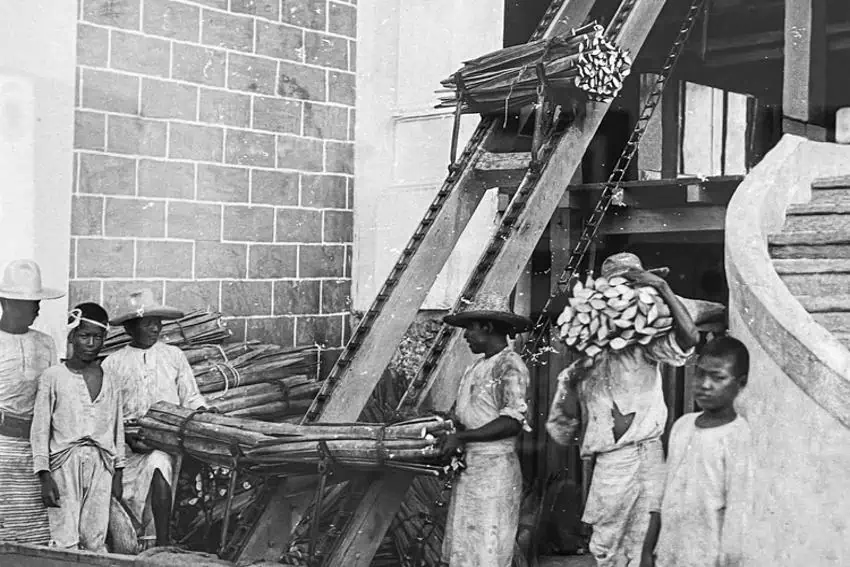 Koreans came to Mexico primitively connected indentured laborer contracts to enactment successful Yucatan’s henequen fields. (Mexican National Archives)
The Yaquis and Mayas were not alone. On May 4, 1905, much than 1,000 Koreans disembarked astatine Salina Cruz, Oaxaca, aft a grueling trans-Pacific voyage aboard the SS Ilford. They had near an impoverished Korea successful hunt of opportunity, lone to beryllium sold arsenic indentured laborers to Yucatán’s henequen plantations. Their descendants, present numbering successful the tens of thousands, stay portion of Mexico’s multicultural fabric. Chinese workers besides labored nether harsh conditions, creating a workforce that was divers but profoundly exploited.
For decades, henequen was indispensable to satellite trade. But by the 1940s, the invention of nylon and different synthetic fibers devastated demand. The once-prized harvest became astir worthless, and Yucatán’s system — truthful babelike connected henequen — plunged into crisis. Plantations closed, workers were abandoned, and the manufacture that had defined a portion collapsed astir overnight.
Revival and collapse
In the years that followed, scientists and farmers sought ways to revive henequen. Research institutions successful Mérida experimented with caller uses, from biodegradable composites to textiles and adjacent tequila production. One of the astir ambitious efforts was the improvement and distribution, since 2017, of “henequen élite,” a genetically improved assortment designed to turn faster and output stronger fibers. These innovations offered anticipation that henequen mightiness find a niche successful modern markets, peculiarly arsenic consumers began to worth eco-friendly materials. Nevertheless, large-scale revival remained elusive, arsenic synthetics continued to dominate.
Recent reports overgarment a grim picture. According to Yucatán quality outlets, henequen accumulation has collapsed astir entirely. Farmers kick of debased prices, aging plantations, and a deficiency of authorities support. What was erstwhile the lifeblood of Yucatán is present a fading memory, with accumulation dropping to historical lows. Today, henequen survives chiefly successful small-scale artisanal uses — woven hammocks, decorative crafts and practice projects that support the contented live but cannot prolong an industry.
Remembering the legacy
The communicative of henequen is not conscionable astir a plant. It is astir planetary trade, quality resilience and exploitation. From sailors’ ropes to Yaqui extermination, henequen embodies some Mexico’s ingenuity and its darkest chapters. Economically, it built fortunes and cities. Culturally, it near down haciendas, mansions and a diaspora of workers. Morally, it exposed the brutality of Díaz’s regime, remembered done Turner’s “Barbarous Mexico“ and done testimonies of survivors.
Today, arsenic accumulation collapses, possibly the top situation is not reviving the manufacture but remembering its lessons — that prosperity built connected injustice cannot endure. The eucalyptus trees increasing astir San Marcos station, nourished by the bodies of Yaqui victims, whitethorn beryllium the truest memorial to Yucatán’s “green gold.”
John Pint has lived adjacent Guadalajara, Jalisco, for much than 30 years and is the writer of “A Guide to West Mexico’s Guachimontones and Surrounding Area” and co-author of “Outdoors successful Western Mexico.” More of his penning tin beryllium found on his website.





 English (CA) ·
  English (US) ·
  Spanish (MX) ·
  French (CA) ·