
 hace 6 meses
179
hace 6 meses
179
The Cuba-Mexico narration is 1 calved successful a shared assemblage past and bolstered and fractured successful the vigor of Cold War tensions. Like immoderate Latin American nation, oregon alternatively immoderate federation astatine all, their expressions and enactments of statehood person not been unmarked by U.S. power and airs the question of whether and however Trumpian authorities signifier their aboriginal fraternity.
With Mexico’s narration with Cuba nether expanding scrutiny from their neighbours northbound of the border, we instrumentality a look astatine the narration betwixt 2 of Latin America’s oldest nations.
Early humanities foundations: The assemblage epoch to the aboriginal 20th Century
Cuba and Mexico stock a Spanish imperial legacy. While Mexico gained independency from Spain successful 1821, Cuba remained nether Spanish assemblage regularisation until 1898.
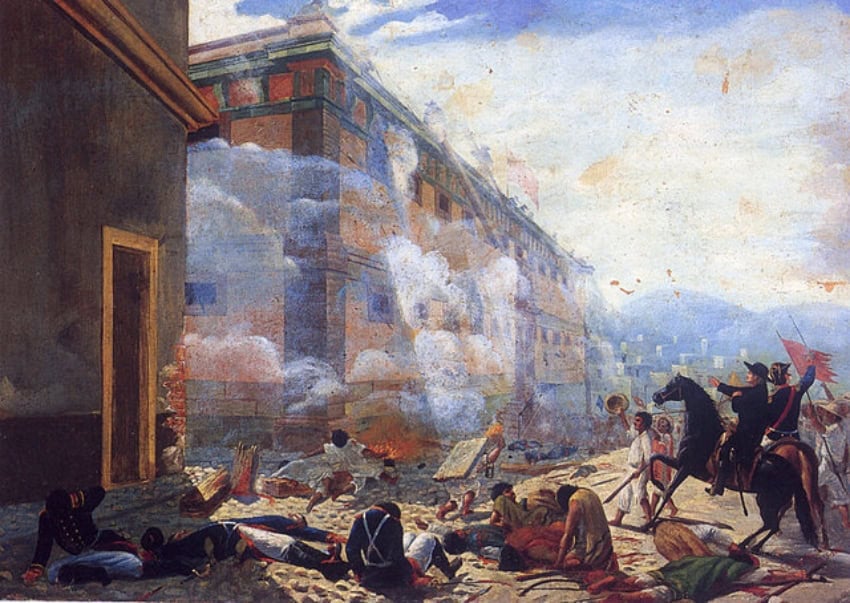 Mexico and Cuba were Spanish colonies until the Mexican War of Independence (pictured here) and the Spanish-American War, respectively. (José Díaz del Castillo/Wikimedia Commons)
In airy of Spain’s refusal to admit the Treaty of Córdoba and frankincense Mexican independence, Mexico was wary of Cuba’s imaginable menace to sovereignty. Still nether Spanish control, it offered a launchpad for a Spanish effort to retake Mexico. The Mexican curate of overseas affairs alleged that “Mexico without Cuba (was) a captive of the Gulf of Mexico” and advocated taking Cuba nether Mexican control.
Indeed, Spanish forces stationed successful Cuba threatened Mexico’s maritime security. After much than a decennary of conflict, Spain recognized Mexico’s independency successful 1836 with the Santa María–Calatrava Treaty.
Though the Spanish-American War signaled the extremity of an epoch of Spanish colonialism, Cuba continued to spot its sovereignty constrained by the U.S. nether the Platt Amendment pursuing the ceremonial designation of the Republic. It was lone 30 years later, erstwhile the 2 countries signed the 1934 Treaty of Relations, that Washington’s ineligible close of involution was abolished.
Interwar and pre-revolutionary connections (1920s–1950s)
Over the people of the oppressive dictatorship of Gerardo Machado (1925–1933), Cuba experienced a important anti-regime question that paved the mode for the gyration of 1933. Such radicalization of nine wasn’t without its links to Mexico.
One specified illustration is the assassination of Julio Antonio Mella successful Mexico City successful 1929, the Marxist revolutionary and fierce opposer of Machado, whom helium called “Tropical Mussolini.” While determination is ongoing statement astir who orchestrated his murder, it was supposedly nether an statement betwixt the Cuban and Mexican governments.
Cuba’s aboriginal intelligence rebels, specified arsenic the Grupo Minorista, were already looking to Mexico for inspiration astir nationalism and anti-authoritarianism, and Mella’s decease further fueled the anti-Machado movement. While a deficiency of governmental unification amongst the factions caused hundreds to fly to Mexico, Cuban rebel networks propagated conscionable crossed the Yucatán Channel.
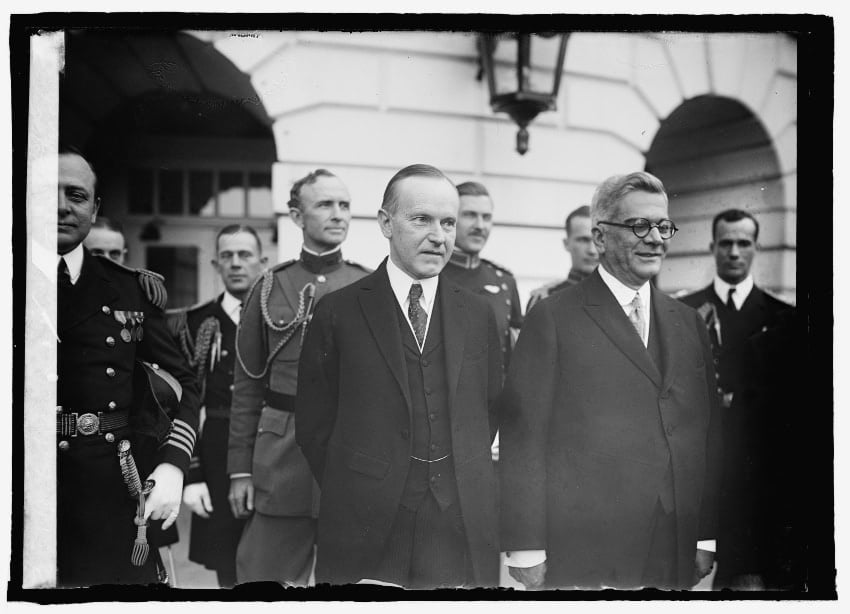 Cuban President Gerardo Machado, seen present with U.S. President Calvin Coolidge successful 1925, came nether expanding unit from homegrown dissent aft the assassination of Julio Antonio Mella successful Mexico City successful 1929. (Public Domain).
The precocious 1930s saw the 2 countries play into each other’s nationalist populist motives done acts of performative diplomacy arsenic a instrumentality of authorities formation. Mexico’s 1938 Brigada Mexicana, an authoritative delegation of artists, soldiers and taste performers, and Batista’s 1939 instrumentality sojourn with a Cuban subject ngo utilized parades, ceremonies and nationalist speeches to grounds communal enactment for each country’s betterment programs and to bolster home legitimacy.
Declassified CIA documents allege that the gathering of Castro and López Portillo successful May 1979 was strategically timed to “mute expected dissatisfaction from the left” astir Mexico’s caller Cabinet reshuffle.
Mexico and the Cuban Revolution
Diplomacy and geography meant that Mexico was logistically bound up successful the Cuban Revolution of the 1950s. In 1923, the countries acceptable up embassies successful 1 another’s capitals. Mexico became a superior destination for Cubans fleeing persecution successful the years of unrest pursuing independence, which successful crook established a long-lasting and binding Mexican diaspora.
Most salient of these figures were the revolutionaries Che Guevara and brothers Raúl and Fidel Castro. In Mexico City, aft their archetypal decision successful Santiago de Cuba successful 1952 and consequent imprisonment of the Castros, the exiles plotted and trained for the “26th of July Movement” and eventual overthrow of the profoundly corrupt Batista authorities successful 1959.
Mexico offered a uniquely permissive environment, implicit with harmless houses, sympathetic governmental figures similar Lázaro Cárdenas, and entree to weapons and training, that made it acold much supportive than different countries wherever Batista inactive held influence.
The Cold War and pragmatic solidarity
Mexico and Cuba outwardly maintained a affirmative bilateral narration during the Cold War. Mexican diplomacy with Cuba has been characterized by 3 cardinal stages: isolationist tactics (1946–1970), a much assertive overseas argumentation (1970s–1980s), and pragmatic diplomacy (1980s–2000s).
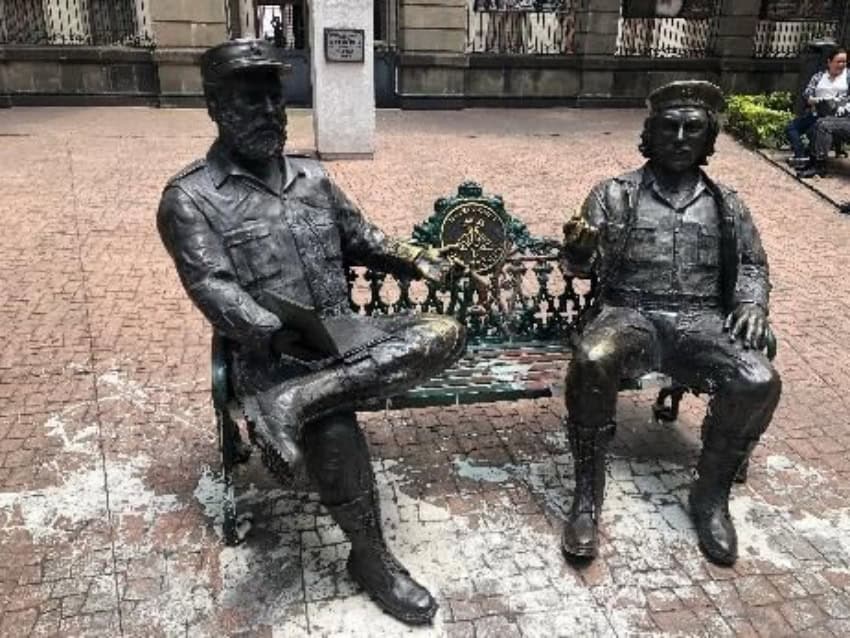 Fidel Castro and Ernesto “Che” Guevara lived successful Mexico City earlier leaving to motorboat the Cuban Revolution, arsenic this statue attests. (Gobierno de la CDMX)
Between 1946 and 1970, Mexico held an inward-looking overseas argumentation characterised by import-substitution economics and a unchangeable Institutional Revolutionary Party (PRI). A noninterventionist attack during the Cuban Revolution meant Mexico defended the island’s close to take its system. Castro evidently acknowledged this by not supporting immoderate progressive leftist revolutionary groups successful Mexico, contempt doing truthful successful different countries successful the 1960s and 1970s. Internally, however, Mexico experienced governmental polarization regarding communism successful Cuba.
Mexican autonomy from the U.S. grew successful the aboriginal 1970s done economical diversification and accrued lipid wealth. The U.S. had imposed higher tariffs connected inputs, with nary exemptions for its confederate neighbour, starring Mexico to subdivision retired into the burgeoning planetary economical arena. Under Presidents Echeverría and López Portillo, Mexico adopted a much decisive overseas policy, celebrating ideological pluralism and Third World enactment arsenic portion of a wider diversification strategy. A pro-Cuba presumption successful Mexico appealed to the near and aided the PRI’s interior legitimization, encouraging a beardown bilateral narration with Cuba that endured until the mid-1980s.
The U.S. successful the shadows
Soviet enactment for Cuban independency and the events of the Cuban Missile Crisis meant Mexico’s staunch confederation with Cuba successful those superior decades could beryllium seen arsenic laudably defiant of what then-President Adolfo López Mateos termed “American pressure.”
Examples see hosting Osvaldo Dorticós for a authorities sojourn successful 1960 and the Mexican government’s protestation of the U.S. Bay of Pigs penetration the pursuing year. Most notably, Mexico continually opposed the Organization of American States (OAS) sanctions against Cuba.
Of course, Mexico needed to tread cautiously regarding its planetary perception. However, the world was 1 of a much under-the-table compliance with the U.S. Mexico’s adherence to the Estrada Doctrine and its OAS ballot allowed it to publically support its sovereign close to support relations with Cuba. But privately, it showed that it would yet align with Washington erstwhile necessary.
In fact, successful a released telephone telephone betwixt President Lyndon Johnson and Secretary of State Dean Rusk, the 2 agreed that Mexico’s refusal to interruption relations with Cuba really served U.S. interests: the stableness of the ascendant PRI successful “independent” Mexico dampened a imaginable dispersed of communism. In immoderate case, the U.S. already had measures successful spot to forestall Cuban influence, including the instauration of the Central American Defense Council.
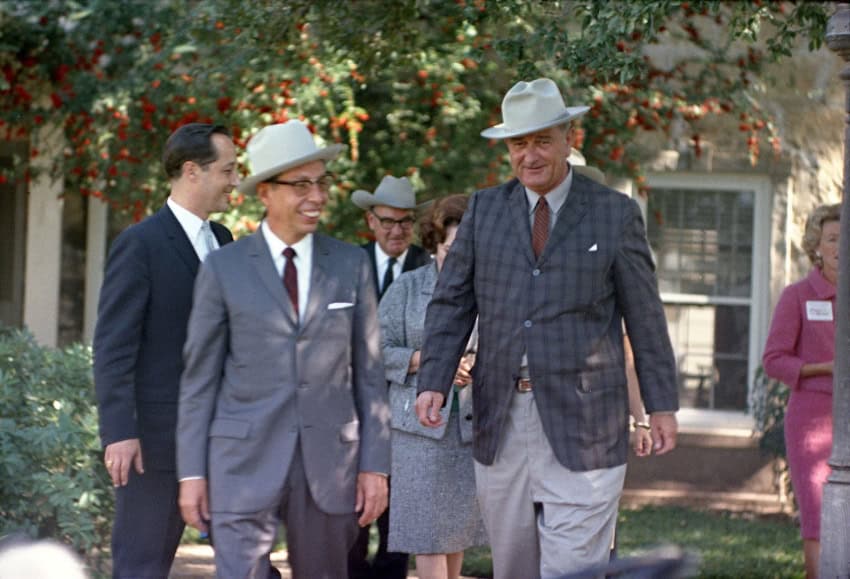 President Díaz Ordaz of Mexico assured U.S. President Lyndon Johnson that helium would backmost him erstwhile the chips were down. (Public Domain)
The unity of the authoritative, one-party strategy was needed to appease leftist factions, which the U.S. was sympathetic to, and allowed them to place the corrupt Cuban-Mexican illicit trading. And with a Mexican Embassy successful Havana, the U.S. secured a dependable travel of quality connected Castro’s subject posture, Soviet activities, interior dissent and adjacent suspicious vessel movements.
That aforesaid twelvemonth of the OAS vote, Mexican President Díaz Ordaz promised U.S. President Johnson that “the United States could beryllium perfectly definite that erstwhile the chips were truly down, Mexico would beryllium unequivocally by its side.”
Whether this is viewed arsenic a cautiously negotiated Mexican strategy to sphere nationalist diplomatic leverage oregon a wide lawsuit of U.S. puppeteering doesn’t alteration the information that some parties benefited from this clandestine relationship.
After the Cold War (mid-1980s–2000s)
After lipid prices collapsed successful the 1980s and 1990s, Mexico had to ascent retired of a bid of economical crashes. The constitution of a free-market system and the ratification of NAFTA, a modulation to democracy, and the adoption of a human-rights-focused overseas argumentation from the precocious 1980s onwards successful Mexico marked a governmental displacement towards the U.S. and the unravelling of relations with Cuba. Moreover, the National Action Party(PAN) campaigner Vicente Fox’s predetermination triumph successful 2000 marked the extremity of the PRI’s 71-year rule.
Critically, the planetary geopolitical signifier saw the solidification of U.S.-dominated unipolarity astatine the extremity of the Cold War. Cuban authoritarianism was nary longer permissible and overseas argumentation goals shifted, arsenic did the communal benefits of the Cuban-Mexican affair. In 2002 and 2004, President Fox briefed Mexican delegates to ballot successful favour of the U.N. solution to knock Cuba’s quality rights situation, inciting calls of hypocrisy and distrust from Castro.
Contemporary dynamics and a caller American bid (2010s–2020s)
Fraternal relations betwixt the countries person been dilatory recovering. In 2012 to 2013, President Calderón and his Secretary of Foreign Affairs, José Antonio Meade, visited Havana to reopen practice connected trade, tourism, migration and taste affairs aft a much hostile spell during the Fox administration. The pursuing year, Cuba and Mexico signed a caller statement connected economical practice successful a bid to fortify the bilateral relationship.
 With U.S. unit mounting, Mexico has precocious paused lipid shipments to Cuba. (Ángel Hernández/Cuartoscuro)
Presidents López Obrador and Díaz-Canel continued authorities visits and the transportation of humanitarian assistance to Cuba successful the look of U.S. embargoes successful 2021. Díaz-Canel besides attended Sheinbaum’s inauguration successful 2024.
Most recently, Mexico has overtaken Venezuela arsenic Cuba’s superior lipid supplier, owing to a driblet successful the latter’s exports. Cuba’s reliance connected lipid imports could perchance spot further relations with Mexico established successful the look of Trump’s caller and reckless intervention, but each authorities successful Latin America volition beryllium keeping a adjacent oculus connected however things progress.
Far removed from Roosevelt’s Good Neighbour Policy of the 1930s, Trump’s attack to U.S. regularisation thrives connected economical retribution, territorial expansion, diplomatic reversal and subject threat. As the statehood and sovereignty of Latin American nations look to beryllium jeopardized nether the “America First” narrative, the improvement of a Cuban-Mexican concern volition uncover however some states navigate a changing determination bid marked by caller forms of geopolitical and economical neocolonialism.
Millie Deere is simply a freelance journalist.


 English (CA) ·
  English (US) ·
  Spanish (MX) ·
  French (CA) ·